한국에서 누군가의 집에 초대받았을 때 지켜야 할 기본적인 예절과, 준비하면 좋은 선물 등에 대해 알아보겠습니다.
Let’s go over the essential etiquette when you're invited to a Korean home, including what to bring and how to behave.
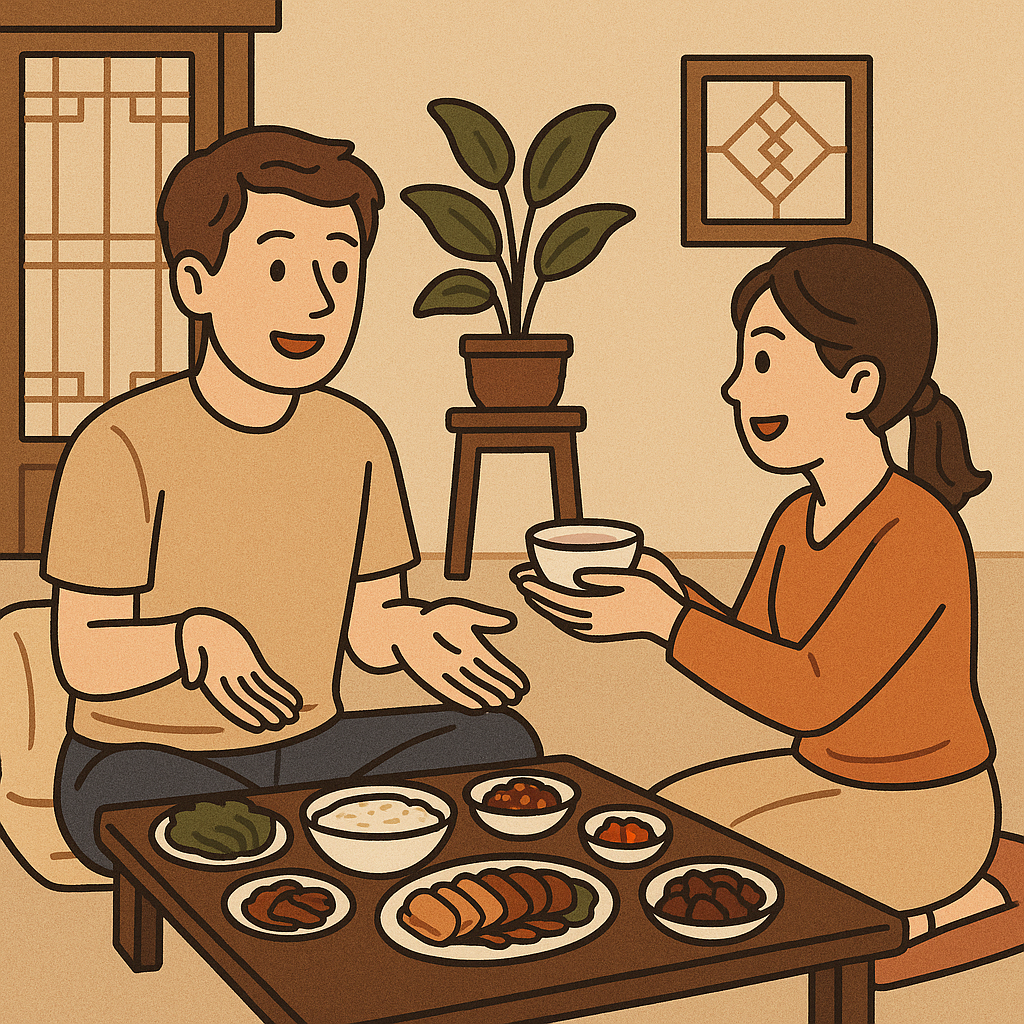
🧾 초대받는 것은 큰 의미입니다
Being Invited Is a Sign of Closeness
한국어: “집에 초대한다”는 건 사적인 관계로 들어왔다는 뜻이에요.
영어: Being invited to someone’s home means you’re entering a more personal relationship.
발음: jip-e cho-dae-han-da-neun geon sa-jeok-in gwan-gye-ro deu-reo-wat-da-neun tteut-i-e-yo
▶ 이유: 한국 문화에서 집은 단순한 공간이 아니라 가족과 사적인 삶이 중심이 되는 장소이기 때문에, 누군가의 집에 간다는 것은 신뢰와 정(情)의 표현입니다.
▶ Why: In Korea, the home is a private space. Inviting you in shows trust and emotional closeness (jeong).
👣 현관에서 신발 벗기
Take Off Your Shoes at the Entrance
한국어: “현관에서 신발을 벗는 건 기본 예절이에요.”
영어: Taking off your shoes is basic etiquette.
발음: hyeon-gwan-e-seo sin-bal-eul beot-neun geon gi-bon ye-ui-i-e-yo
▶ 이유: 한국 가정은 바닥에서 생활하는 문화입니다. 청결과 예의를 위해 신발은 현관에서 벗는 것이 필수입니다.
▶ Why: Koreans often sit or sleep on the floor, so cleanliness and respect require removing shoes indoors.
🎁 작은 선물 준비하기
Bring a Small Gift for the Host
한국어: “빈손으로 가지 않는 게 예의입니다.”
영어: It’s polite not to show up empty-handed.
발음: bin-son-eu-ro ga-ji anh-neun ge ye-ui-im-ni-da
추천 선물 (Suggested Gifts):
- 과일 바구니 (gwa-il ba-gu-ni / fruit basket)
- 디저트, 케이크 (di-jeo-teu, ke-i-keu / dessert, cake)
- 지역 특산물 (ji-yeok teuk-san-mul / local specialty)
- 와인이나 커피 (wa-in-i-na keo-pi / wine or coffee)
▶ 이유: 선물은 감사의 표현이며, 작더라도 정성을 나타내는 것이 중요합니다.
▶ Why: A small gift shows appreciation. It’s the thought and effort that count, not the price.
🕰️ 정해진 시간보다 약간 일찍 도착
Arrive Slightly Early, Not Late
한국어: “약속 시간보다 5~10분 일찍 도착하는 게 예의에요.”
영어: Arriving 5–10 minutes early is considered polite.
발음: yak-sok si-gan-bo-da o~sip bun il-jjik do-cha-kha-neun ge ye-ui-e-yo
▶ 이유: 한국에서는 시간을 잘 지키는 것이 신뢰의 상징입니다. 너무 일찍 도착하면 당황스럽고, 늦는 건 실례입니다.
▶ Why: Punctuality reflects respect in Korea. Too early may feel intrusive, while lateness is disrespectful.
🪑 자리 배치 기다리기
Wait to Be Told Where to Sit
한국어: “먼저 앉지 말고 자리를 안내받는 것이 좋아요.”
영어: Don’t sit until you're shown where to sit.
발음: meon-jeo an-ji mal-go ja-ri-reul an-nae-bat-neun ge si-jo-a-yo
▶ 이유: 자리에는 암묵적인 예절이 있습니다. 연장자나 주인 옆은 특정 의미를 가질 수 있기 때문에 지시에 따르는 것이 좋습니다.
▶ Why: Seating may follow social hierarchy, so it’s polite to wait for the host’s instruction.
🍽️ 음식 권할 때 예의 있게 반응하기
Respond Politely to Food Offers
한국어: “많이 드세요”엔 “잘 먹겠습니다”로 화답해요.
영어: When offered food, respond with “I’ll enjoy it” or “Thank you.”
발음: man-i deu-se-yo / jal meok-get-seum-ni-da
▶ 이유: 음식은 한국에서 환대와 정성의 상징입니다. 권유에 감사히 반응하는 태도가 중요합니다.
▶ Why: Food is a symbol of hospitality and care in Korea. Gracious acceptance shows respect.
📵 휴대폰은 잠시 내려두기
Put Away Your Phone During Meals
한국어: “식사 중에는 핸드폰 사용을 자제하는 게 좋아요.”
영어: It’s best to avoid using your phone during meals.
발음: sik-sa jung-e-neun haen-deu-pon sa-yong-eul ja-je-ha-neun ge jo-a-yo
▶ 이유: 함께 있는 사람에 대한 예의이며, 진심 있는 대화와 교류에 집중하는 것이 문화적 예절입니다.
▶ Why: It shows you value the people around you and are present in the moment.
🙇 작별 인사는 정중하게
Leave with a Polite Goodbye
한국어: “오늘 정말 감사했습니다. 잘 먹었습니다.”
영어: “Thank you for having me. I really enjoyed the meal.”
발음: o-neul jeong-mal gam-sa-haet-seum-ni-da / jal meok-eot-seum-ni-da
▶ 이유: 작별 인사는 감사와 존중의 마무리입니다. 다음 만남으로 이어지는 인상을 남깁니다.
▶ Why: A respectful goodbye shows gratitude and leaves a good impression for future interactions.
💬 다음 날 감사 문자 보내기
Send a Thank-You Message the Next Day
한국어: “어제 초대해 주셔서 정말 감사했어요.”
영어: “Thank you so much for inviting me yesterday.”
발음: eo-je cho-dae-hae ju-syeo-seo jeong-mal gam-sa-haet-seo-yo
▶ 이유: 예의를 지키고 인간관계를 돈독히 하는 한국적 정서입니다. 간단한 메시지도 호감도가 올라갑니다.
▶ Why: Expressing gratitude strengthens the relationship. A short, polite message goes a long way.
✅ 요약 정리 (Summary)
한국의 집 초대는 단순한 방문이 아니라 신뢰와 배려의 문화입니다. 기본 예절을 알고 준비하면, 좋은 인상을 남길 수 있고 관계도 자연스럽게 가까워질 수 있습니다.
Being invited to a Korean home is a sign of closeness. Following simple etiquette helps you make a great impression and deepen the relationship.